The Best Hootsuite Alternatives for Startups in 2026

The Best Hootsuite Alternatives for Startups in 2026

In a startup, your time is your most valuable asset. Spending hours inside a bloated social management dashboard is a 2024 mistake. In 2026, the goal is “Lean Social Operations.” You need tools that are fast, data-focused, and affordable. Here is the 2026 breakdown of the best Hootsuite alternatives for your startup.

1. Metricool: The Value King

The preferred 2026 choice for high-volume, low-budget teams.

  • The Edge: An incredibly generous free tier and an intuitive interface that covers all major platforms.
  • Best Feature: Unified Inbox—manage all your niche comments and DMs in one place.
  • The Strategy: Use Metricool for the ‘Maintenance’ of your social presence, and ContHunt for the ‘Growth’ strategy.

2. Buffer: The Simplicity Standard

For startups that value clean design and straightforward workflows.

  • The Edge: No feature bloat. Buffer focuses on one thing: getting your posts out scheduled.
  • Best Feature: AI Assistant—it helps you rewrite your ‘Viral Hooks’ based on 2026 brevity standards.
  • Ideal For: Small teams where the founder is still handling the social posting.

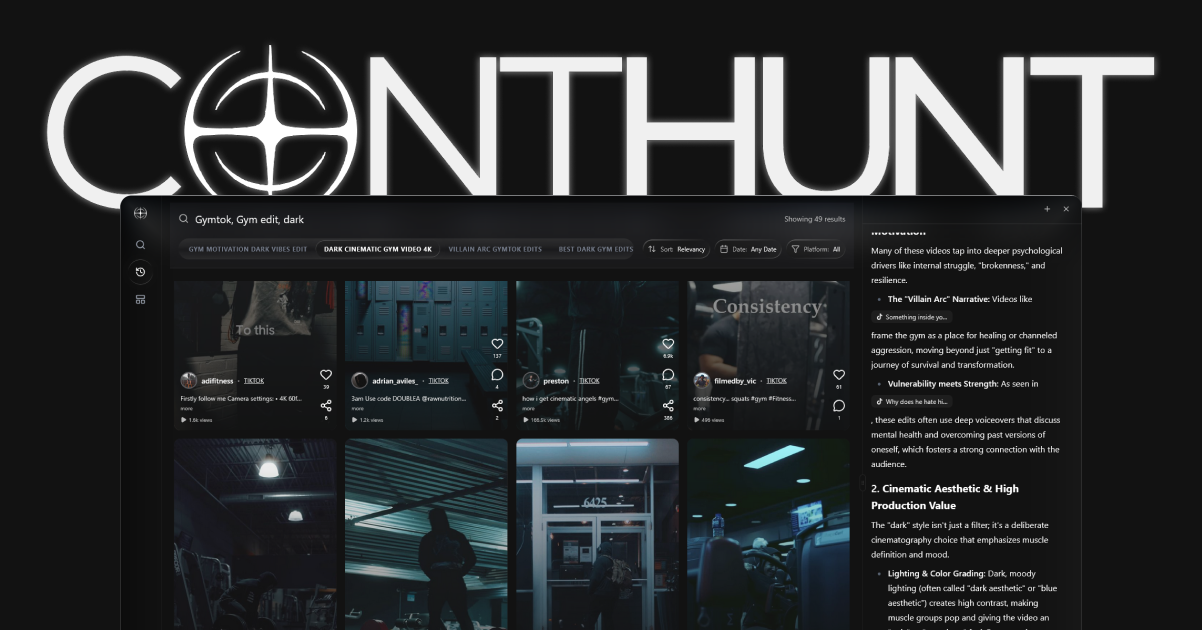
3. ContHunt: The Growth Intelligence Layer

Not a scheduler, but an essential part of the 2026 startup stack.

  • The Edge: It tracks ‘Interest Nodes’ and ‘Node Velocity’.
  • The Value: While other tools tell you when to post, ContHunt tells you what to post. For a startup, posting the ‘Wrong content at the right time’ is still a waste of resources.
  • Action: Use ContHunt to identify the high-velocity topics in your industry, then use a free scheduler to push that content out.

4. Top 10 Social Ops Tips for 2026 Startups (via ContHunt)

  1. The “Lean Stack”: ContHunt Free + Metricool Free = Professional-grade social ops for $0.
  2. Node-Specific Scheduling: Posting your ‘News’ content 30 minutes before the global interest peak in ContHunt.
  3. Automated Repurposing: Using AI to turn one high-performing ‘Interest Node’ video into 5 different Shorts variations.
  4. Competitor Velocity Mapping: Tracking which rival startup is successfully ‘Owning’ a new sub-niche.
  5. Audience Sentiment Alerts: Getting a notification when the mood in your specific interest node shifts.
  6. Zero-In-Box Strategy: Using unified tools to respond to high-value node comments within the first 15 minutes of posting.
  7. Node-Based Tagging: Using 2026 hashtag logic (Specific Nodes > Broad Categories) across all scheduling platforms.
  8. Visual Consistency Audits: Ensuring your ‘Startup Brand’ (Visual Hooks) is consistent across all scheduled posts.
  9. Global-to-Local Sprints: Using data from different regions to schedule posts for the ‘Peak Velocity’ of that specific market.
  10. The “Pivot Alert”: Using ContHunt to identify when to stop a specific content series before it stops working.

2026 Startup Social Ops Checklist

  • [ ] Have I audited my tool costs for “Feature Overlap”?
  • [ ] Am I using a data tool (ContHunt) to guide my scheduling tool?
  • [ ] Does my current stack support direct posting to the big three (Shorts, Reels, TikTok)?
  • [ ] Have I verified the ‘Relative Performance’ of my top 5 most recent posts?

Conclusion

The 2026 startup founder is a Workflow Optimizer. By choosing a lean stack that prioritizes intelligence over bells and whistles, you ensure your social presence scales with your business without breaking the bank. Use ContHunt to find the signals, and use these alternatives to send them. Scale smart.

How should you apply The Best Hootsuite Alternatives for Startups in 2026 without copying one viral post?

Start with a small sample of public posts in the same niche and format, then compare them side by side. ContHunt is useful here because it keeps the original source available, so you can inspect the first seconds, overlays, comments, and publishing context instead of ranking ideas by total views alone. Capture the promise, the proof, and the next step the creator asks for. After you draft your version, change only one variable at a time: hook, length, caption, or thumbnail. That is the founder-led research loop we use internally at Synthenova Enterprises LLP: evidence first, then a test you can actually measure.

What should you write down while reviewing examples?

    1. Metricool: The Value King
    1. Buffer: The Simplicity Standard
    1. ContHunt: The Growth Intelligence Layer
    1. Top 10 Social Ops Tips for 2026 Startups (via ContHunt)
  • 2026 Startup Social Ops Checklist
  • Conclusion
  • Original URL and publish date
  • Audience and offer, if one is stated
  • What you will test next on your own account

Which ContHunt workflow matches this page?

  1. Search public short-form videos for the same viewer problem.
  2. Open several examples and keep the source links.
  3. Compare hooks, pacing, text, and comments.
  4. Turn repeating patterns into a brief, not a clone.
  5. Validate with your own retention and reply data.

Which official docs should you verify against?

How do you keep the brief honest?

Write the date you collected examples and the number of posts you actually opened. If you only watched two videos, do not describe a trend. Note what you could not see: private analytics, paid spend, and anything behind a login. ContHunt does not replace YouTube Analytics, Instagram Insights, or TikTok Analytics on your own account. It helps you inspect public creative with the source still attached. When you publish, keep a short log: hook used, length, caption, and the result after a comparable window. That log is more useful than copying a competitor’s posting time.

If the page you are briefing is about The Best Hootsuite Alternatives for Startups in 2026, ask whether the viewer already knows the punchline. If they do, the first seconds have to show a new proof, a tighter demo, or a clearer next step. If they do not, the first seconds have to name the problem in plain language. Either way, the caption should match the video so a muted viewer and a later reader get the same promise. That is the standard we use in editorial review at ContHunt, and it is the standard we recommend to agencies handing briefs between researchers and editors.

What questions should you answer before you shoot?

Does this idea match the audience you can actually reach? Can you film the proof you described? Is there a next step that is honest? If the answer is no, pick a smaller version of the idea. Then review two more public examples and only then schedule production.

Related research

Key data

Cost Savings
80% — The average reduction in social management overhead for startups who switch from enterprise suites to a lean ContHunt-led stack in 2026.
Engagement ROI
2.5x — The increase in engagement-per-dollar spent for teams who prioritize data intelligence over expensive scheduling interfaces.

Common Questions

Is Hootsuite too expensive for a 2026 startup?
Generally, yes. Hootsuite's 2026 pricing model is geared toward enterprise teams with dedicated social budgets. Startups can often get 90% of the same utility for 20% of the cost from next-gen alternatives.
Which tool has the best 2026 analytics for startups?
**Metricool** offers excellent free-tier analytics, but for **'Algorithmic Intelligence'** (predicting what will work next), **ContHunt** is the preferred choice for 2026 startup founders.
Do any Hootsuite alternatives support 2026 short-form video features?
Most modern schedulers now support direct posting to Reels, TikTok, and Shorts. However, only **ContHunt** provides the 'Node-Level' intelligence required to optimize that short-form content.
All posts
Elena

Written by

Elena leads marketing at ContHunt. With a background in content strategy for B2B SaaS, she helps brands tell stories that actually convert.

More like this