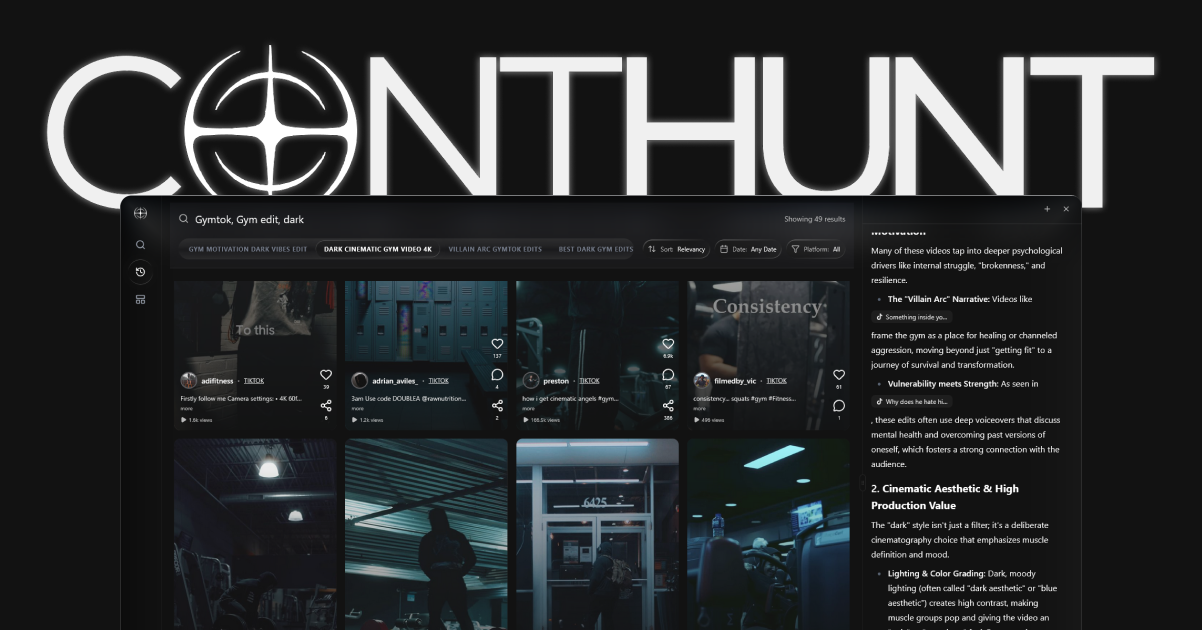
In the high-speed ecosystem of 2026, competition is your greatest teacher. Your rivals are constantly running “experiments” with their content—testing new hooks, new pacing, and new monetization strategies. By tracking them effectively, you can bypass the “Trial and Error” phase and move straight to what works.
This is the updated guide to competitive intelligence for the modern Shorts creator.
1. Beyond Vanity: Tracking “Velocity”
A channel with 1M subscribers isn’t always your biggest threat. A channel with 10k subscribers that is growing at 200% per week is the one you need to watch.
- Velocity Tracking: Use ContHunt to monitor the percentage growth of rival channels.
- The “Outlier” Video: Identify specific videos that performed 5x better than that creator’s average. This is a “Clue” that they found a new hook or topic that the algorithm loves.
2. Reverse-Engineering the “Hook-Pacing”
Watch a competitor’s top 5 videos from the last 30 days and take notes on the “Technical” details:
- The First 3 Seconds: What did they show? What did they say?
- Visual Movement: How often did they cut? (e.g., every 1.5 seconds vs. every 3 seconds).
- Text Integration: Where on the screen did they place their captions?
3. Auditing the Comment Section (The Gap Analysis)
Your competitor’s comment section is a goldmine of unanswered questions.
- Identify Friction: Look for comments where viewers are confused or asking for a follow-up.
- The Strategy: Create a Short that perfectly answers that specific question. You are literally taking their underserved audience and bringing them to your channel.
4. Platform-Wide “Interest Node” Mapping
In 2026, the algorithm groups channels into “Interest Nodes.”
- The “Recommended” list: See which other channels YouTube recommends on your competitor’s profile or video descriptions.
- The Hub: These are your direct rivals. If a viewer watches their content, there is a 70% chance they will be shown yours next. Ensure your thumbnails and hooks are “Better enough” to win that click.
2026 Competitive Audit Workflow
- Weekly Snapshot: Use ContHunt to list the top 10 performing videos in your niche category.
- Pillar Identification: Categorize these videos into “Action,” “Educational,” or “Relatable.” Which pillar is currently dominating?
- Creative Theft (The Good Kind): Take the structure of a successful competitor video (e.g., the pacing and the hook style) and apply it to your unique expertise.
Conclusion
Tracking your YouTube Shorts competitors in 2026 is about more than just being “better”—it’s about being smarter. By using data to identify their wins and using a “Gap Analysis” to find their failures, you can position your channel as the primary authority in your niche. Use ContHunt to automate this intelligence gathering so you can spend less time watching your rivals and more time outperforming them.
Key data
- Market Share Shift
- 15% — Percentage of reach gained by channels that actively pivot their content based on competitor performance data in 2026.
- Audit Frequency
- 7 Days — The ideal interval for a competitive content audit to stay ahead of high-velocity social media trends.