The Best Instagram Competitor Analysis Tools for 2026

The Best Instagram Competitor Analysis Tools for 2026

If you’re not watching your competitors in 2026, you’re flying blind. The Instagram algorithm now prioritizes “Relative Performance”—meaning it doesn’t just care how your video performs, but how it performs compared to other creators in your specific Interest Node.

To win, you need the tools that expose your rivals’ secrets.

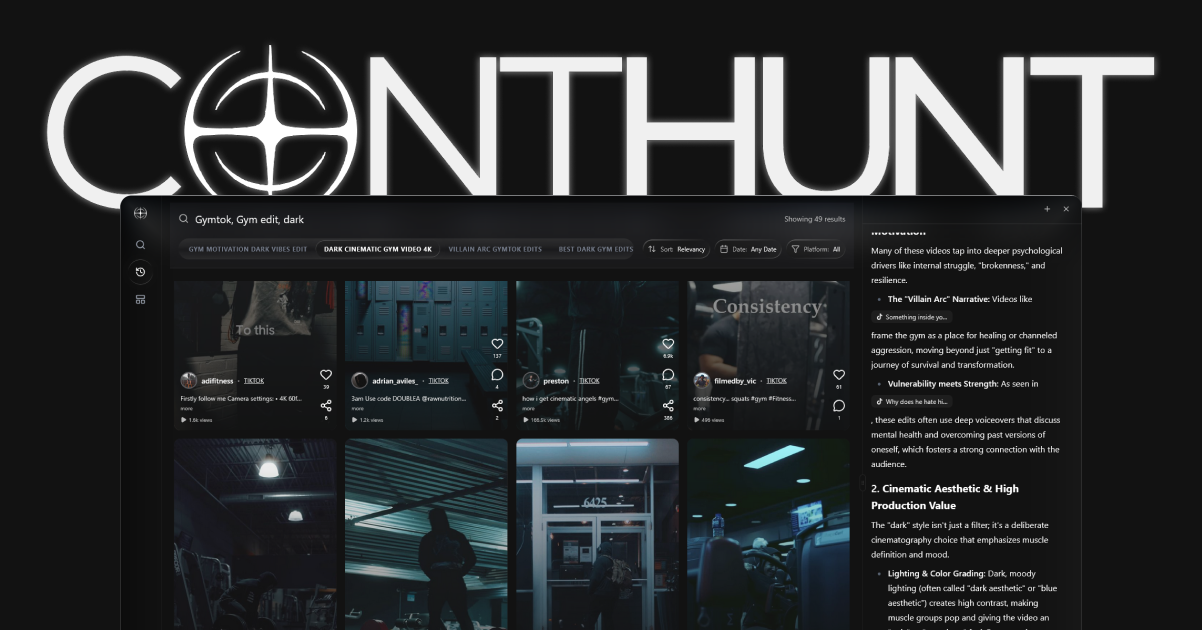
1. ContHunt (The Master of Benchmarking)

ContHunt’s 2026 update has solidified it as the ultimate competitive intelligence tool.

  • Unique Feature: “The Mirror” — It creates a side-by-side comparison of your content vs. your top 3 competitors, highlighting differences in color palette, audio velocity, and caption frequency.
  • Best For: Creators who want to scientifically audit why they are being outpaced in the feed.

2. Metricool “Rival Watch”

Metricool has doubled down on its benchmarking suite for 2026.

  • Advanced Feature: “The Delta Report” — A weekly automated PDF that tells you exactly which hashtags and audio tracks your competitors are using to steal your audience’s attention.

3. Social Insider

Social Insider remains the king of Deep Historical Data.

  • The 2026 Edge: It now offers “Brand Sentiment Benchmarking,” allowing you to see if your audience’s emotional response is more or less positive than your direct competitors’.

4. Phlanx

For those focused on Engagement Rates, Phlanx remains a simple and effective choice.

  • Highlight: Their 2026 “Audit Engine” can detect if a competitor’s sudden growth is organic or driven by high-velocity bot networks, helping you avoid following fake trends.

2026 Competitor Audit Framework

Every month, use your chosen tool to answer these three questions:

  1. The Hook Gap: What is the first sentence of their 3 most viral Reels?
  2. The Audio Lead: Are they using trending tracks before or after they hit the “Top 50” list?
  3. The Posting Cadence: Have they shifted their frequency in response to recent algorithm updates?

Conclusion

Competitive analysis in 2026 isn’t about copying; it’s about Calibration. By using tools like ContHunt or Metricool, you can see the patterns that lead to success and adjust your own unique creative voice to fit the current market demand. Don’t guess what’s working—know it.

How should you apply The Best Instagram Competitor Analysis Tools for 2026 without copying one viral post?

Start with a small sample of public posts in the same niche and format, then compare them side by side. ContHunt is useful here because it keeps the original source available, so you can inspect the first seconds, overlays, comments, and publishing context instead of ranking ideas by total views alone. Capture the promise, the proof, and the next step the creator asks for. After you draft your version, change only one variable at a time: hook, length, caption, or thumbnail. That is the founder-led research loop we use internally at Synthenova Enterprises LLP: evidence first, then a test you can actually measure.

What should you write down while reviewing examples?

    1. ContHunt (The Master of Benchmarking)
    1. Metricool “Rival Watch”
    1. Social Insider
    1. Phlanx
  • 2026 Competitor Audit Framework
  • Conclusion
  • Original URL and publish date
  • Audience and offer, if one is stated
  • What you will test next on your own account

Which ContHunt workflow matches this page?

  1. Search public short-form videos for the same viewer problem.
  2. Open several examples and keep the source links.
  3. Compare hooks, pacing, text, and comments.
  4. Turn repeating patterns into a brief, not a clone.
  5. Validate with your own retention and reply data.

Which official docs should you verify against?

How do you keep the brief honest?

Write the date you collected examples and the number of posts you actually opened. If you only watched two videos, do not describe a trend. Note what you could not see: private analytics, paid spend, and anything behind a login. ContHunt does not replace YouTube Analytics, Instagram Insights, or TikTok Analytics on your own account. It helps you inspect public creative with the source still attached. When you publish, keep a short log: hook used, length, caption, and the result after a comparable window. That log is more useful than copying a competitor’s posting time.

If the page you are briefing is about The Best Instagram Competitor Analysis Tools for 2026, ask whether the viewer already knows the punchline. If they do, the first seconds have to show a new proof, a tighter demo, or a clearer next step. If they do not, the first seconds have to name the problem in plain language. Either way, the caption should match the video so a muted viewer and a later reader get the same promise. That is the standard we use in editorial review at ContHunt, and it is the standard we recommend to agencies handing briefs between researchers and editors.

What questions should you answer before you shoot?

Does this idea match the audience you can actually reach? Can you film the proof you described? Is there a next step that is honest? If the answer is no, pick a smaller version of the idea. Then review two more public examples and only then schedule production.

Related research

Key data

Market Awareness
92% — The percentage of high-growth Instagram accounts in 2026 that use at least one dedicated competitor tracking tool.
Trend Adoption
4x Faster — Teams using AI-driven benchmarking adopt new viral formats 4x faster than those using manual observation.

Common Questions

Is competitor tracking ethical in 2026?
Yes, as long as you are using public data through official APIs. In 2026, competitive intelligence is a standard business practice used to understand market shifts, not to steal creative work. Authentic tools like ContHunt focus on 'Strategic Inspiration' rather than direct imitation.
How many competitors should I track?
For professional creators in 2026, the sweet spot is 5-8 direct competitors and 3 'Aspirational Leaders' outside your niche. This provides a balanced view of both immediate technical benchmarks and long-term creative trends.
Can these tools see private account data?
No. In 2026, privacy standards are stricter than ever. Legitimate competitor analysis tools only track public accounts and aggregated metadata provided by the Instagram Graph API.
All posts
Elena

Written by

Elena leads marketing at ContHunt. With a background in content strategy for B2B SaaS, she helps brands tell stories that actually convert.

More like this