In the rapidly shifting social media market of 2026, your “Tool Stack” defines your efficiency. Metricool has long been the favorite for its clean UI and aggressive pricing, but is it the right fit for your 2026 growth goals?
Let’s break down the costs and the competition.
1. Metricool 2026 Pricing Tiers
Metricool has simplified its structure for the AI era:
- Free ($0): 1 Brand, basic analytics, 50 posts/month. Best for experimental hobbyists.
- Starter ($18/mo): 5 Brands, AI writing assistant, 2,000 posts/month. Best for solo creators.
- Advanced ($45/mo): 10 Brands, Team roles, API access. Best for small agencies.
- Agency ($119/mo): 50 Brands, Custom reports, White-labeling. Best for scale.
2. Top Alternatives for 2026
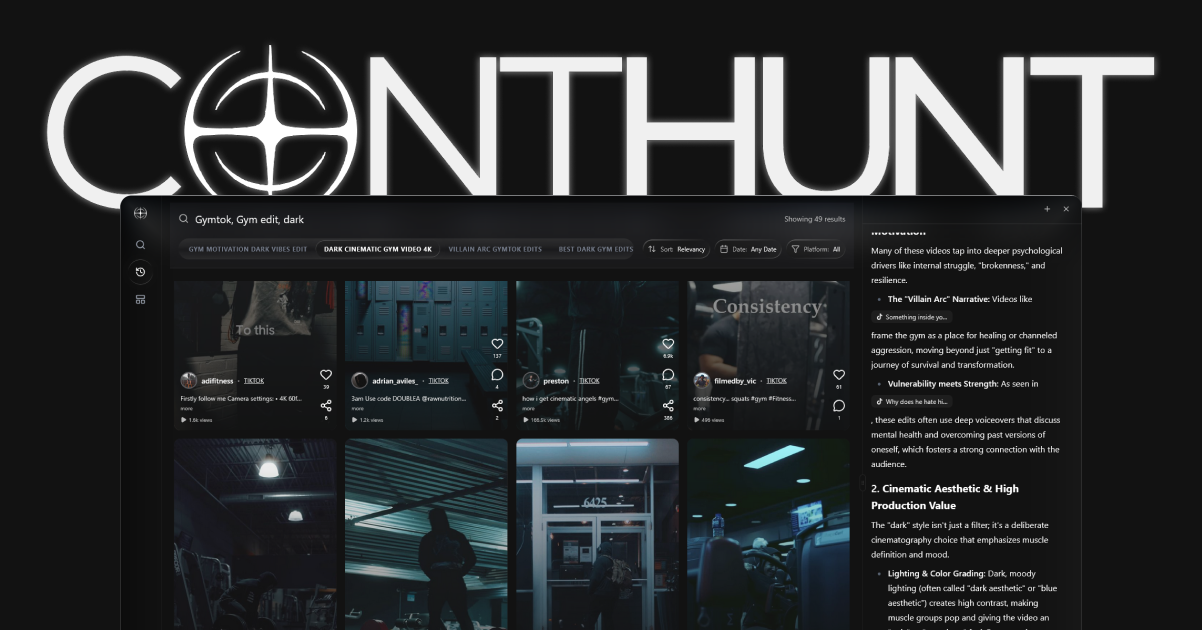
ContHunt (The Strategy Alt)
If Metricool is the car, ContHunt is the GPS.
- The Difference: Metricool tells you when you posted; ContHunt tells you why your competitor is outranking you.
- Best For: Short-form video specialists who prioritize viral performance over schedule management.
Hootsuite Horizon (The Workflow Alt)
Hootsuite is the enterprise alternative for those who need Native AI Integration.
- The Difference: Hootsuite’s 2026 AI can automatically clip your long-form videos into Shorts and Reels, a feature Metricool has yet to perfect.
- Best For: Multi-channel brands with a heavy video repurposing workflow.
Buffer (The Simplicity Alt)
Buffer remains the choice for Minimalists.
- The Difference: For 2026, Buffer has removed almost all visual clutter, focusing purely on a ‘Canvas’ style scheduling experience.
- Best For: Individuals who find enterprise dashboards overwhelming.
2026 ROI Comparison
| Tool | Ease of Use | AI Depth | Video ROI | 2026 Value Score |
|---|---|---|---|---|
| Metricool | 5/5 | 3/5 | 3/5 | 9/10 |
| ContHunt | 4/5 | 5/5 | 5/5 | 8.5/10 |
| Hootsuite | 3/5 | 5/5 | 4/5 | 7/10 |
Conclusion
Metricool pricing in 2026 offers historical value that is hard to ignore. If you need a reliable, cost-effective hub for your daily posting, Metricool is the clear winner. However, if your 2026 goal is to crack the viral code of short-form video, you should supplement (or replace) it with a strategic power-tool like ContHunt.
How should you apply Metricool Pricing and Alternatives: The 2026 Comparison Guide without copying one viral post?
Start with a small sample of public posts in the same niche and format, then compare them side by side. ContHunt is useful here because it keeps the original source available, so you can inspect the first seconds, overlays, comments, and publishing context instead of ranking ideas by total views alone. Capture the promise, the proof, and the next step the creator asks for. After you draft your version, change only one variable at a time: hook, length, caption, or thumbnail. That is the founder-led research loop we use internally at Synthenova Enterprises LLP: evidence first, then a test you can actually measure.
What should you write down while reviewing examples?
-
- Metricool 2026 Pricing Tiers
-
- Top Alternatives for 2026
- 2026 ROI Comparison
- Conclusion
- Original URL and publish date
- Audience and offer, if one is stated
- What you will test next on your own account
Which ContHunt workflow matches this page?
- Search public short-form videos for the same viewer problem.
- Open several examples and keep the source links.
- Compare hooks, pacing, text, and comments.
- Turn repeating patterns into a brief, not a clone.
- Validate with your own retention and reply data.
Which official docs should you verify against?
How do you keep the brief honest?
Write the date you collected examples and the number of posts you actually opened. If you only watched two videos, do not describe a trend. Note what you could not see: private analytics, paid spend, and anything behind a login. ContHunt does not replace YouTube Analytics, Instagram Insights, or TikTok Analytics on your own account. It helps you inspect public creative with the source still attached. When you publish, keep a short log: hook used, length, caption, and the result after a comparable window. That log is more useful than copying a competitor’s posting time.
If the page you are briefing is about Metricool Pricing and Alternatives: The 2026 Comparison Guide, ask whether the viewer already knows the punchline. If they do, the first seconds have to show a new proof, a tighter demo, or a clearer next step. If they do not, the first seconds have to name the problem in plain language. Either way, the caption should match the video so a muted viewer and a later reader get the same promise. That is the standard we use in editorial review at ContHunt, and it is the standard we recommend to agencies handing briefs between researchers and editors.
What questions should you answer before you shoot?
Does this idea match the audience you can actually reach? Can you film the proof you described? Is there a next step that is honest? If the answer is no, pick a smaller version of the idea. Then review two more public examples and only then schedule production.
Related research
- Best Hashtags for YouTube Shorts
- 100+ YouTube Shorts Ideas for Every Niche (2026 Master List)
- 2026 Social Media Post Ideas: Quick-Win Engagement Hooks
- 2026 Social Media Marketing Ideas: Beyond the Basics
Key data
- Cost-per-Brand
- $1.20 — The average monthly cost per brand on Metricool's 2026 Agency plan, the lowest in the professional category.
- Tool Consensus
- 74% — The percentage of creators who use Metricool for scheduling but a second tool like ContHunt for deep video research in 2026.