In the fragmented social landscape of 2026, your audience is everywhere, but their behavior is unique to every app. Being a “Single-Platform Creator” is high-risk. To build a resilient brand, you need an omnichannel strategy that treats data as a unified language.
Here is the framework for multi-platform intelligence in 2026.
1. The Normalization Framework
Each platform measures success differently. In 2026, you must “Normalize” your metrics to make them comparable:
- The Conversion Factor: If a ‘Share’ on TikTok is worth 10 points, a ‘Save’ on Instagram might be worth 12 points.
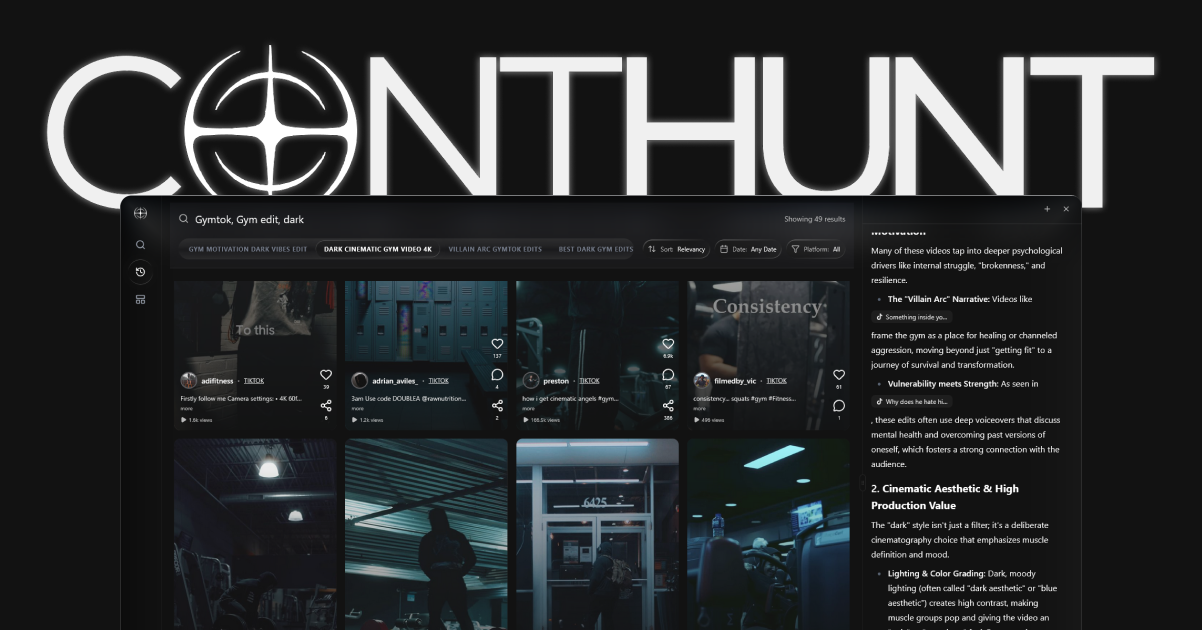
- The Unified View: Use tools like ContHunt to see all three major short-form feeds (TikTok, Reels, Shorts) on a single retention chart.
2. Platform-Specific Resonance (Interest Nodes)
The same video will hit different “Nodes” on different platforms.
- TikTok: Often hits ‘Interest Nodes’ based on high-frequency sound trends and raw authenticity.
- Instagram: Hits ‘Interest Nodes’ based on visual aesthetic and high-value coaching.
- YouTube: Acts as the ‘Search Discovery’ node where long-term intention is captured.
3. The 2026 Content Lifecycle
A unified strategy allows you to “Waterfall” your content:
- Test on TikTok: Use the high-velocity feedback loop of TikTok to see if an idea has “Signal.”
- Optimize for Reels: If it works, re-edit with higher production value and “Visual Velocity” for Instagram.
- Archive on Shorts: Upload to YouTube for long-term SEO search discoverability.
4. Cross-Platform Attribution (The Holy Grail)
In 2026, mapping the user journey is critical.
- The Bridge: Are your TikToks driving people to your Instagram “Link in Bio”?
- The conversion: Use 2026 tracking pixels to see if a viewer who engaged with a Reel eventually subscribed to your YouTube channel.
Social Media Analytics Guide for 2026
If you came here from the old social-media-analytics-guide-2026 page, this is the reusable version of the same idea.
- Track reach, saves, shares, watch time, and conversion rate instead of chasing vanity totals alone.
- Compare each platform against its own baseline because TikTok, Instagram, and YouTube reward different behaviors.
- Use weekly reviews to spot which topics deserve more budget, more edits, or a full merge into a stronger pillar.
- Tie analytics back to action: keep what grows, rework what underperforms, and retire what never earns impressions.
2026 Multi-Platform Audit Checklist
- [ ] Normalized engagement scores for the last 30 days?
- [ ] Identified the #1 performing platform for “Saves”?
- [ ] Assigned platform-specific “Signaling Goals”?
- [ ] Verified data parity across all 3 Professional Dashboards?
Conclusion
A multi-platform analytics strategy in 2026 is no longer optional—it is a survival mechanism. By unifying your data through a platform like ContHunt and adopting a “Normalization” framework, you can turn chaotic cross-platform noise into a clear, actionable growth map.
Key data
- Growth Multiplier
- 2.4x — The average reach increase for creators who use normalized cross-platform benchmarking in 2026 compared to siloed tracking.
- Data Parity Gap
- 15% — The typical discrepancy in view counts between platforms that requires normalization for accurate 2026 strategy audits.