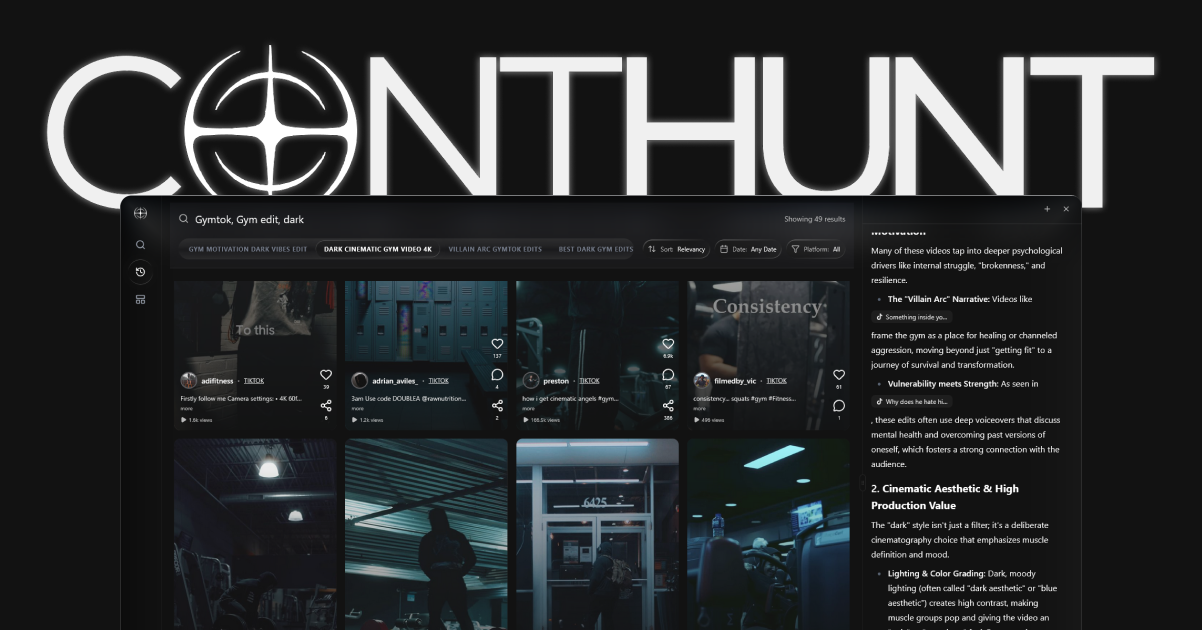
In the breakneck environment of 2026 TikTok, “Intuition” isn’t enough. Your competitors are likely using AI-driven tools to find the exact hooks, audios, and topics that are winning your audience’s attention. To compete, you need a systematic approach to competitive intelligence.
Here is how to deconstruct your rivals’ success in 2026.
1. Defining Your “Peer Set”
In 2026, your competitors aren’t just people in your industry; they are anyone competing for your audience’s “Interest Node”.
- Direct Rivals: Accounts selling the same product/service.
- Aspirational Rivals: Large accounts in your niche that set the standard for quality.
- Node Peers: Accounts in different industries that attract the same demographic (e.g., a “Cooking” account and a “Home Organization” account often share the same node).
2. The 2026 Deconstruction Framework
When analyzing a rival’s viral video, look for these three signals:
- The Retention Hook: Is it visual, auditory, or text-based? What happens in the first 0.5 seconds?
- The Information Density: How many value-points are delivered per 10 seconds? In 2026, “High-Density” content is winning.
- The Sentiment Signal: Read the comments. What are the specific questions people are asking? This reveals the “Knowledge Gap” you can fill with your own content.
3. Advanced Benchmarking with ContHunt
ContHunt has revolutionized TikTok competitor analysis for 2026 by moving beyond simple “View Counts.”
- Relative Success Index (RSI): This tells you if a competitor’s video is doing well because of their follower count, or because the content is actually superior.
- Interest Node Mapping: See the visual overlap between your audience and your rivals’. This helps you identify “White Space” nodes that your competitors are ignoring.
4. The “Reactionary Response” Trap
The goal of competitor analysis in 2026 is Inspiration, not Imitation.
- Don’t Copy: If you see a rival’s “Day in the Life” video go viral, don’t just replicate it. Instead, analyze why it worked (e.g., it used a specific ‘Vibe’ audio and high-contrast lighting) and apply those technical lessons to your own unique series.
2026 TikTok Competitor Audit Checklist
- [ ] Identified 5 accounts in my primary Interest Node?
- [ ] Analyzed the top 3 ‘Retention Hooks’ from my rivals this week?
- [ ] Checked the ‘Relative Success Index’ of my top 3 peers in ContHunt?
- [ ] Mapped out 2 ‘White Space’ nodes to target next?
Conclusion
Competitive analysis in 2026 is the bridge between “Making Content” and “Building an Empire.” By systematically deconstructing your rivals’ successes and failures with tools like ContHunt, you can stop guessing and start growing with surgical precision. The feed is waiting—make sure you’re ready to win.
How should you apply TikTok Competitor Analysis: 2026 Tactics for Growth without copying one viral post?
Start with a small sample of public posts in the same niche and format, then compare them side by side. ContHunt is useful here because it keeps the original source available, so you can inspect the first seconds, overlays, comments, and publishing context instead of ranking ideas by total views alone. Capture the promise, the proof, and the next step the creator asks for. After you draft your version, change only one variable at a time: hook, length, caption, or thumbnail. That is the founder-led research loop we use internally at Synthenova Enterprises LLP: evidence first, then a test you can actually measure.
What should you write down while reviewing examples?
-
- Defining Your “Peer Set”
-
- The 2026 Deconstruction Framework
-
- Advanced Benchmarking with ContHunt
-
- The “Reactionary Response” Trap
- 2026 TikTok Competitor Audit Checklist
- Conclusion
- Original URL and publish date
- Audience and offer, if one is stated
- What you will test next on your own account
Which ContHunt workflow matches this page?
- Search public short-form videos for the same viewer problem.
- Open several examples and keep the source links.
- Compare hooks, pacing, text, and comments.
- Turn repeating patterns into a brief, not a clone.
- Validate with your own retention and reply data.
Which official docs should you verify against?
How do you keep the brief honest?
Write the date you collected examples and the number of posts you actually opened. If you only watched two videos, do not describe a trend. Note what you could not see: private analytics, paid spend, and anything behind a login. ContHunt does not replace YouTube Analytics, Instagram Insights, or TikTok Analytics on your own account. It helps you inspect public creative with the source still attached. When you publish, keep a short log: hook used, length, caption, and the result after a comparable window. That log is more useful than copying a competitor’s posting time.
If the page you are briefing is about TikTok Competitor Analysis: 2026 Tactics for Growth, ask whether the viewer already knows the punchline. If they do, the first seconds have to show a new proof, a tighter demo, or a clearer next step. If they do not, the first seconds have to name the problem in plain language. Either way, the caption should match the video so a muted viewer and a later reader get the same promise. That is the standard we use in editorial review at ContHunt, and it is the standard we recommend to agencies handing briefs between researchers and editors.
What questions should you answer before you shoot?
Does this idea match the audience you can actually reach? Can you film the proof you described? Is there a next step that is honest? If the answer is no, pick a smaller version of the idea. Then review two more public examples and only then schedule production.
Related research
- TubeBuddy Review 2026: Is It Still Relevant for Modern Creators?
- Best Free TubeBuddy Alternatives for YouTube Growth in 2026
- TikTok vs. YouTube Shorts Analytics: Decoding the Data in 2026
- TikTok vs. Instagram Reels: The 2026 Creator’s Guide
Key data
- Strategic Insight
- 80% — The percentage of viral TikTok trends in 2026 that can be predicted by monitoring 'Rival Acceleration' signals 24 hours in advance.
- Growth Multiplier
- 3.5x — The average growth increase for TikTok accounts that perform weekly competitive benchmarking compared to those that post in isolation.