The rivalry between TubeBuddy and vidIQ is as old as YouTube itself. But in 2026, they aren’t just fighting each other; they are fighting against the platform’s own native AI and newer, more specialized intelligence layers.
If you have to choose one for your 2026 growth, here is the breakdown.
1. Feature Showdown: SEO & Discovery
- TubeBuddy (The Keyword King): Still the most robust tool for traditional Keyword Mapping. Its “Keyword Explorer” is unparalleled for finding low-competition search terms in 2026.
- vidIQ (The Trend Hunter): vidIQ has pivoted harder into Real-Time AI. Its “Daily Ideas” and “Trend Alerts” are superior for creators who want to jump on viral topics the moment they surface.
2. Channel Management & Bulk Tools
- TubeBuddy Wins: If you need to change 100 links in your descriptions or A/B test a thumbnail across several videos, TubeBuddy’s bulk suite is the 2026 industry standard.
- vidIQ Struggles: While vidIQ has some management features, they feel like secondary add-ons rather than core architectural strengths.
3. The 2026 “New Creator” Experience
- vidIQ (A Better UI): For someone starting in 2026, vidIQ’s dashboard is more intuitive. It feels like a modern SaaS product, whereas TubeBuddy can sometimes feel cluttered with legacy menus.
- TubeBuddy (A Better Price): TubeBuddy’s pricing Tiers for smaller channels (under 1k subscribers) remain some of the most accessible in the market.
4. The Intelligence Gap (Where ContHunt Fits)
In 2026, both TubeBuddy and vidIQ have a blind spot: Interest Node Alignment.
- Standard Extension: Tells you which tags to use.
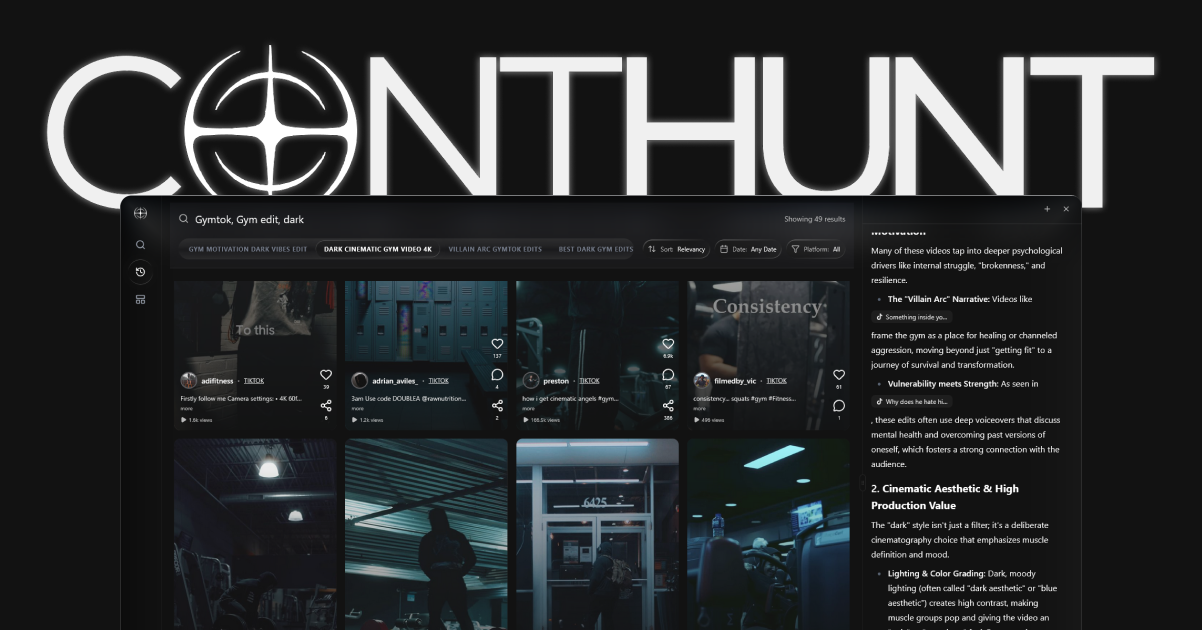
- ContHunt Intelligence: Tells you who is watching your competitors and what nodes you need to hit to go viral.
- The Pro Stack: Most 2026 pros use TubeBuddy/vidIQ for the technical metadata and ContHunt for the strategic creative planning.
2026 Comparison Checklist
- [ ] Do I prioritize bulk editing (TubeBuddy) or creative ideas (vidIQ)?
- [ ] Is my primary format long-form (TubeBuddy) or trending shorts (vidIQ)?
- [ ] Am I using the free tiers of both before committing to a paid plan?
- [ ] Have I linked my choice to ContHunt for cross-platform node tracking?
Conclusion
The “Winner” of the TubeBuddy vs. vidIQ battle in 2026 is actually the creator who knows how to use both. TubeBuddy is your mechanic, keeping the engine of your channel running smoothly. vidIQ is your scout, finding the best paths for growth. And ContHunt is your strategist, ensuring every video you make is perfectly aligned with the 2026 interest-graph. Choose your tools wisely, and let the growth begin.
How should you apply TubeBuddy vs. vidIQ: The Ultimate 2026 Comparison without copying one viral post?
Start with a small sample of public posts in the same niche and format, then compare them side by side. ContHunt is useful here because it keeps the original source available, so you can inspect the first seconds, overlays, comments, and publishing context instead of ranking ideas by total views alone. Capture the promise, the proof, and the next step the creator asks for. After you draft your version, change only one variable at a time: hook, length, caption, or thumbnail. That is the founder-led research loop we use internally at Synthenova Enterprises LLP: evidence first, then a test you can actually measure.
What should you write down while reviewing examples?
-
- Feature Showdown: SEO & Discovery
-
- Channel Management & Bulk Tools
-
- The 2026 “New Creator” Experience
-
- The Intelligence Gap (Where ContHunt Fits)
- 2026 Comparison Checklist
- Conclusion
- Original URL and publish date
- Audience and offer, if one is stated
- What you will test next on your own account
Which ContHunt workflow matches this page?
- Search public short-form videos for the same viewer problem.
- Open several examples and keep the source links.
- Compare hooks, pacing, text, and comments.
- Turn repeating patterns into a brief, not a clone.
- Validate with your own retention and reply data.
Which official docs should you verify against?
How do you keep the brief honest?
Write the date you collected examples and the number of posts you actually opened. If you only watched two videos, do not describe a trend. Note what you could not see: private analytics, paid spend, and anything behind a login. ContHunt does not replace YouTube Analytics, Instagram Insights, or TikTok Analytics on your own account. It helps you inspect public creative with the source still attached. When you publish, keep a short log: hook used, length, caption, and the result after a comparable window. That log is more useful than copying a competitor’s posting time.
If the page you are briefing is about TubeBuddy vs. vidIQ: The Ultimate 2026 Comparison, ask whether the viewer already knows the punchline. If they do, the first seconds have to show a new proof, a tighter demo, or a clearer next step. If they do not, the first seconds have to name the problem in plain language. Either way, the caption should match the video so a muted viewer and a later reader get the same promise. That is the standard we use in editorial review at ContHunt, and it is the standard we recommend to agencies handing briefs between researchers and editors.
What questions should you answer before you shoot?
Does this idea match the audience you can actually reach? Can you film the proof you described? Is there a next step that is honest? If the answer is no, pick a smaller version of the idea. Then review two more public examples and only then schedule production.
Related research
- How to Make a Video Go Viral: The 2026 Social Momentum Formula
- How to Make a Reel on Instagram: The Step-by-Step 2026 Guide
- How to Identify Market Trends: The 2026 Intelligence Guide
- How to Grow Your YouTube Shorts Channel: Complete 2026 Guide
Key data
- Tool Adoption
- 45% — The percentage of professional YouTube channels in 2026 that utilize a hybrid stack of at least two third-party extensions.
- Efficiency Gain
- 15 Hours/Mo — The average time saved by creators using TubeBuddy's bulk processing features for larger video libraries in 2026.