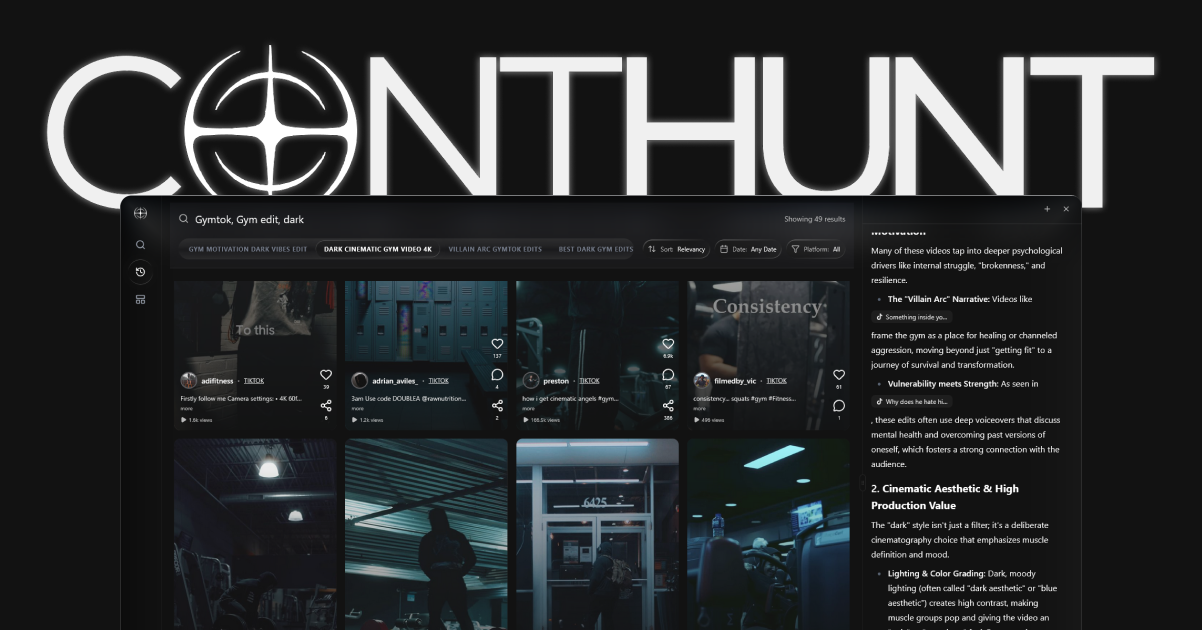
If you are still looking at “Views” and “Likes” to measure your social media success in 2026, you are operating in the dark. In the modern era of the Interest Graph, your raw numbers mean nothing without context. This is where Content Intelligence becomes your most valuable asset.
1. The Death of Basic Analytics
In 2025, the industry reached a breaking point. Algorithms became so complex that a video with 1 million views could be a “failure” if it hit the wrong audience, while a video with 10k views could be a massive “success” if it converted high-value leads.
- The Problem: Traditional dashboards only show your own data.
- The Intelligence Solution: Modern systems look at the Market Velocity. They compare your growth to the Platform-Specific Average (PSA) to see if you are actually outperforming the trend or just riding a wave.
2. The Three Pillars of Content Intelligence
In 2026, Content Intelligence is built on three specific methodologies:
- Node Mapping: Identifying exactly which “Interest Nodes” (e.g., #sustainable-fashion or #productivity-hacks) are currently hungry for content.
- Relative Benchmarking: Using tools like ContHunt to see how your “Swipe-Away Rate” compares to the top 1% of creators in your niche.
- Cross-Platform Normalization: Understanding how a trend on TikTok will likely manifest on YouTube Shorts 48 hours later.
3. How ContHunt Simplifies Complexity
Content Intelligence used to be for Fortune 500 companies. ContHunt has democratized it for every creator.
- The Success Index: We don’t just show you numbers; we give you a “Success Index” out of 100 based on how you are performing relative to your direct competitors.
- Trend Prediction: Our AI identifies when a hashtag is moving from “Niche” to “Mainstream,” giving you the window to post before the saturated “Viral” phase starts.
4. Implementing the Strategy
To adopt a Content Intelligence mindset in 2026:
- Audit your Nodes: Are you posting in the right category for your goals?
- Benchmark your Hooks: Use video-level intelligence to see exactly where people are dropping off.
- Iterate with Data: Stop guessing. If the intelligence says your voiceover is too slow for the current TikTok PSA, speed it up.
5. Practical Workflow
The fastest way to operationalize Content Intelligence is to treat it like a weekly review loop.
- Check the signal: Review the strongest and weakest topics from the last 7 days.
- Map the gap: Compare your current content against competitor overlap and audience demand.
- Ship the next test: Publish one variation with a clearer hook, tighter topic focus, or stronger visual proof.
- Measure again: Use the next performance cycle to decide whether the topic is worth expanding.
2026 Strategic Intelligence Checklist
- [ ] Have I identified the underserved Interest Node for this post?
- [ ] Is my ‘Relative Success Index’ trending upward this month?
- [ ] Am I using ContHunt to normalize data across all short-form platforms?
- [ ] Does this content align with the current ‘Platform-Specific Average’ for engagement?
Conclusion
Content Intelligence is the bridge between having data and using it. In 2026, the creators who win are those who stop looking at their own reflections and start looking at the entire ocean. By using tools like ContHunt to decode the invisible signals of the algorithm, you move from being a passenger to being the pilot of your own growth. Welcome to the future of strategy.
Key data
- Data Mastery Premium
- +210% — The average growth advantage of brands using Content Intelligence vs. traditional analytics in 2026.
- Prediction Accuracy
- 89% — The success rate of ContHunt's Viral Probability score for videos targeting specific interest nodes in mid-2026.