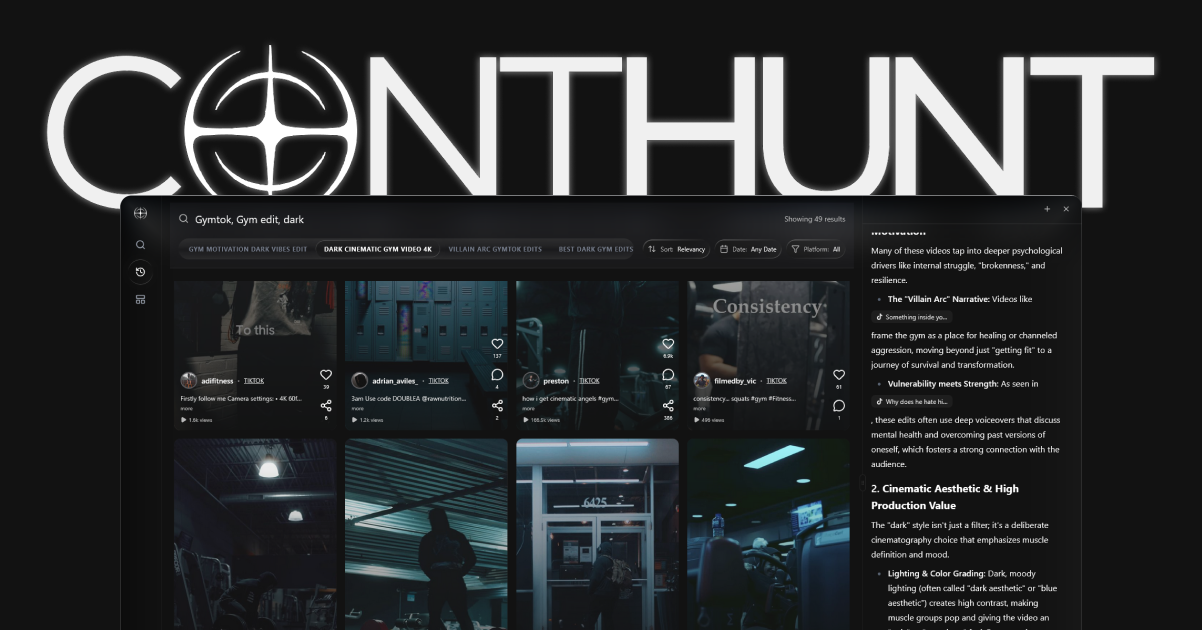
If you want to grow on YouTube in 2026, start with what YouTube exposes: viewer behavior, search terms, titles, descriptions, thumbnails, and whether the Short matches the niche promise. The algorithm is not a fixed checklist. Treat it as a feedback loop: publish a clear promise, watch how the first audience responds, then improve the next upload.
Part 1: How the YouTube Shorts Algorithm Works in 2026
The Survival Metric: Viewed vs. Swiped Away
Viewed-versus-swiped-away is one of the clearest Shorts diagnostics because it shows whether the opening promise made people stop. Do not treat one percentage as a universal pass/fail threshold; compare it against your own baseline, the video’s topic, and similar videos in the same niche.
- The Mechanic: When the Short appears in feed surfaces, people either keep watching or swipe away.
- The Review: Pair that signal with average view duration, rewatches, likes, saves, comments, and search terms.
- ContHunt Integration: Use ContHunt to compare hooks and topics from public competitors before writing the next version.
Connect the Short to the Next Watch
Shorts can support a larger channel journey when the viewer knows what to watch next.
- The Link: Use a related video or playlist when it genuinely continues the promise.
- The Reward: The practical goal is higher viewer satisfaction and more total watch time, not a guaranteed distribution unlock.
Make the Topic Easy to Classify
YouTube says titles, thumbnails, and descriptions help viewers decide what to watch. Make those signals agree with the video.
- Title: State the niche and promise in plain language.
- Opening frame: Show the payoff or problem before the viewer scrolls.
- Description: Put one or two main topic words near the start.
Part 2: A Creator Review Workflow
This is an editorial testing workflow, not a description of YouTube’s internal distribution stages.
- Opening: Check whether the first frame makes the video’s promise clear.
- Viewing: Review retention and engagement alongside the topic and length.
- Comparison: Compare similar uploads on your own channel before drawing conclusions.
- Search: Review available search terms and make the title and description accurate.
Part 3: Viral Hooks That Stop the Swipe
The opening should help a viewer decide whether the video is relevant. These are creative formats to test, not proven ranking factors or promises of virality.
1. The “Final Result First” Hook
Don’t build up to the reveal. Start with it.
- The Logic: By showing the end result, you prove the value immediately.
2. The “Questionable Truth” Hook
Challenge a common belief in your niche.
- Example: “I changed the opening without changing the topic. Here is what happened.”
- Delivery: Show the actual comparison and its limitations rather than claiming a universal result.
3. The “Visual Pattern Interrupt”
Break the visual autopilot of the feed.
- Tactics: Try a close-up of the result or a clear change of composition. Keep the subject readable.
4. The “Negative Hook”
Start with a warning or common failure.
- Example: “Stop doing this if you want [Result].”
- Delivery: Explain the mistake and a practical correction without exaggerating the risk.
5. The “Curiosity Gap” Hook
Use text overlays that create questions.
- Example: “The one mistake I made…”
- Test: Compare a question-based opening with a descriptive opening on similar topics.
Part 4: Hook Auditing with ContHunt
Use ContHunt to research public videos and compare their topics and openings. A competitor’s public views or engagement do not reveal their private retention curve. Review retention for your own uploads in YouTube Analytics, and record what you changed before comparing results.
2026 Algorithmic & Hook Checklist
- [ ] Does the opening show the topic or payoff clearly?
- [ ] Have I linked the Short to a genuinely related next watch?
- [ ] Is the title, opening frame, and description aligned around one topic?
- [ ] Have I compared the idea against recent niche outliers before publishing?
- [ ] Does the visual break the ‘Standard Feed’ pattern?
- [ ] Am I using a high-contrast text overlay in the Safe Zone?
- [ ] Does the video deliver the benefit promised by the opening?
Conclusion
The YouTube Shorts algorithm in 2026 rewards clear viewer fit more than secret metadata tricks. Focus on one niche promise, a fast opening, readable packaging, and honest retention review. Let ContHunt give you competitor evidence before you film, then use YouTube Analytics to decide what to improve next.
Key data
- Retention Benchmark
- Watch time — Review viewed-versus-swiped-away and retention before blaming hashtags.
- Hook Velocity
- First seconds — The opening frame should make the niche promise obvious before the viewer scrolls.
- Retention Floor
- No fixed public floor — YouTube does not publish a universal retention threshold for Shorts distribution.
- Long-Tail Search Views
- Search terms — Use YouTube Analytics to see which queries actually surface each video.
Sources
- Tips for video descriptions · YouTube Help
- Add tags to your YouTube videos · YouTube Help
- Find videos using hashtags · YouTube Help