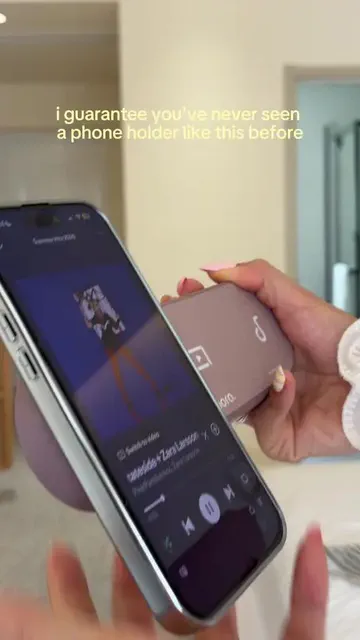
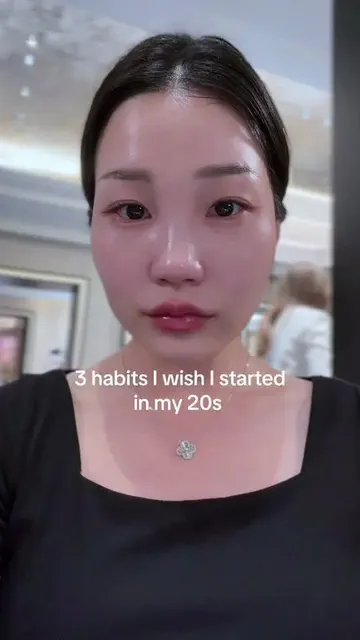
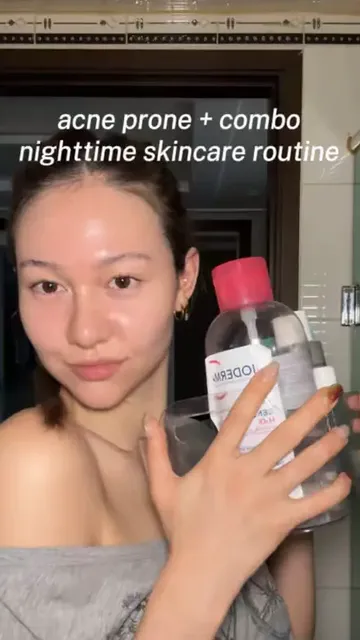
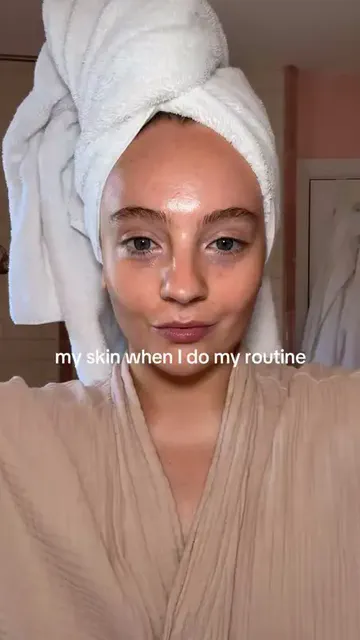
Most creator briefs say the same thing: “Open with a strong hook, use a trending sound, keep it native.” The creator then guesses, and you find out two weeks later whether the guess worked. A better brief shows three openings that already work in your niche, explains the mechanism behind each, and lets the creator adapt them to their own voice.
The research behind that brief takes an afternoon by hand. This guide covers the process, with a template at the end. TikTok’s own creative guidance for performance ads says to introduce your content proposition in the first 3 seconds and to prioritize the hook in the first 6, so those are the seconds your brief has to specify.
Step 1: Write the job as one sentence#
Before you search, write what the video must do for one specific viewer. Use this shape: “[Audience] should [believe or do something] because they see [proof].”
Example: “Women 25 to 40 with reactive skin should believe this serum won’t sting, because they see a patch test on camera.” That sentence becomes your relevance filter. A viral video about a different audience or a different proof does not belong in your research set, however many views it has.
Step 2: Build a search vocabulary in creator language#
Your product page uses brand words. Creators and buyers use other words. Collect them from platform autocomplete, video captions and comment sections, then group them:
| Type | Examples for a skincare serum | What it finds |
|---|---|---|
| Problem words | “my face burns”, “red patches”, “barrier damage” | Problem call-out hooks |
| Outcome words | “glass skin”, “calmer skin in a week” | Result-first hooks |
| Format words | “POV”, “get ready with me”, “honest review” | Format conventions |
| Objection words | “does it actually work”, “worth the money” | Skeptic hooks and proof beats |
| Category words | “niacinamide alternatives”, “dermatologist reacts” | Authority hooks |
Aim for 8 to 12 queries, each with one coherent angle. Ten queries that are synonyms of each other return the same videos ten times.
Step 3: Pull a wide set, then filter it#
Search TikTok, Instagram Reels and YouTube Shorts for a fixed window, such as the last 30 days, so you see what is current. Then filter in two passes.
- Relevance. Does the video match your one-sentence job? Remove anything for a different audience, a different product type or a paid-only brand campaign you cannot copy.
- Outlier ratio. Divide the video’s views by the creator’s median views on recent posts. A video at 3x its creator’s norm tells you more than a big number from a creator who always gets that number. TikTok says in its recommendation explainer that follower count and past performance are not direct inputs, so small accounts do break out, and those breakouts are the cleanest hook lessons.
Step 4: Tag the opening of every kept video#
Open each video and log the first three seconds. Use the same fields every time:
- The spoken line, word for word
- On-screen text, word for word
- The first frame (what is physically visible)
- Motion in the first second (cut, zoom, hand entering, nothing)
- Person on screen? Face visible? Eye contact?
- Product visible by second 3? In use or just held?
- Hook family (use the hook taxonomy)
Tag 80 to 200 videos, the same range the hook taxonomy guide uses. That is enough to see patterns. Count each hook family in your top quartile by outlier ratio, then compare with its share of the whole set. A family that makes up 25% of the set but 45% of the top quartile is worth briefing. Treat counts under 5 as leads to test, not conclusions.
Step 5: Capture the proof beat#
The hook gets the viewer to second 3. Seconds 3 to 10 have to prove what the hook claimed. For each strong video, write down what appears there: a patch test, a texture close-up, a before and after, a receipt screenshot, a side-by-side. Hooks tend to travel across niches. Proof beats are product-specific, so they are what a creator most needs from you.
Illustrative findings for the serum example might read:
- Result-first hooks lead the top quartile, and 7 of the top 10 show the product being applied before the creator speaks.
- Problem call-outs dominate the bottom half. They set up the pain and never show proof in the first 10 seconds.
- Every top video has a visible proof moment by second 8.
Step 6: Write the brief#
Give the creator the mechanism and the reference, never a script to read back. Copy this template.
JOB[Audience] should [believe/do] because they see [proof].HOOK OPTIONS (shoot all three, same body)A. [Family] - First frame: ... / Line: ... / On-screen text: ... Reference: [link] - Why it works: ...B. [Family] - ...C. [Family] - ...PROOF BEAT (seconds 3-10)Show: ... Do not say: ...FORMAT9:16, 20-35 seconds, captions on, sound on. Shot handheld, natural light.DO NOT- Copy a reference line verbatim- Make claims we cannot back up (list them)DELIVER3 hook variants x 1 body, raw footage, usage rights confirmed.Ask for three hook variants on one body. Hook is the cheapest variable to test, and shooting three costs the creator minutes. If you are paying for paid usage, add the disclosure rule from the FTC’s guide for social media influencers: the disclosure belongs in the video itself, not only in the description.
Doing steps 2 to 5 in ContHunt#
Deep Search runs this research as one request. A prompt that fits the serum example:
Which opening hooks are working for sensitive-skin serums on TikTok, Reels and Shorts in the last 30 days? For each video, label the hook family, note the first frame and spoken line, say whether the product is visible by second 3, and describe the proof shown by second 10. Rank by how well the video fits “calm reactive skin without stinging”. Compare top-performing videos against the rest.
ContHunt searches the three platforms, analyzes 500 to 1,000 videos, and returns a ranked list with an answer that cites the videos behind each finding. You can then ask follow-ups against the same set, such as “show only videos where a patch test appears before the first claim”, and save the best references to a board. Captions and metadata only show how creators talk. The claims in your brief should rest on the analyzed video evidence.
Four mistakes that waste the research#
- Briefing from one viral video. One video proves one video. Look for the pattern across the full tagged set of 80 to 200.
- Copying the line, not the mechanism. “I tried it for 30 days” works because it opens a loop. The creator’s version should open one too, in their words.
- Skipping the proof beat. A strong hook that the next seven seconds do not back up gives the viewer a reason to leave.
- Briefing one hook. Always ask for three, from different families.
Research once, brief three hooks, and test them against each other. Get started with one Deep Search on your own niche and bring the tagged results to your next creator brief.