Finding competitor websites is not the same as guessing the brands you already know. The better process starts with evidence: who ranks for the same queries, who appears in the same category lists, who your audience compares you against, and who is gaining attention on social platforms.
Use this workflow when you need a defensible competitor list for SEO, content strategy, paid research, or short-form video tracking.
1. Start With Search Competitors
Open an incognito browser and search the terms a buyer, creator, or marketer would actually use.
Use three query types:
- product queries, such as
competitor analysis tool - problem queries, such as
how to find competitor websites - alternative queries, such as
best [category] alternatives
Record every domain that appears in the top 10 results. A single appearance is a weak signal. A domain that appears across three or more related searches belongs on the shortlist.
2. Use a Competitor Finder Tool
Competitor finder tools are useful when you already have a website and want a domain-overlap view.
Common sources include:
- Semrush competitor finder for organic overlap
- Similarweb search competitors for shared search visibility
- Moz competitive research for SEO overlap
- category-specific tools in your market
These tools are best for validation, not final judgment. They can surface websites that share keywords but serve a different buyer, geography, or price point.
3. Check Review Sites and Category Pages
Search competitors are not always commercial competitors. Review sites help reveal who buyers compare during evaluation.
Check:
- G2 and Capterra category pages
- Product Hunt launches
- app marketplaces
- agency directories
- niche newsletters and tool roundups
Add competitors that show up repeatedly, especially if they are described with the same use case, buyer, or outcome as your product.
4. Add Social and Content Competitors
For creator, SaaS, ecommerce, and media brands, some of the most important competitors may not rank in Google yet. They may be winning attention on TikTok, YouTube Shorts, Instagram Reels, or LinkedIn.
Look for:
- accounts repeatedly appearing in platform recommendations
- videos ranking for the same YouTube or TikTok searches
- creators using the same hooks, offers, or product demos
- brands whose posts get disproportionate saves, shares, or comments
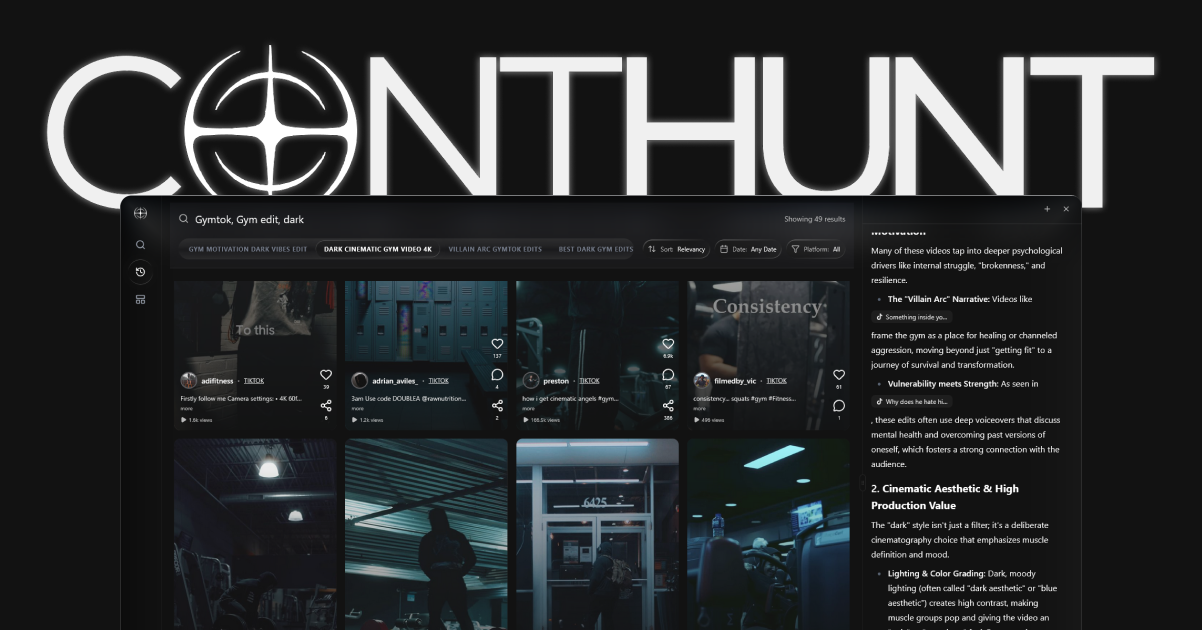
ContHunt Tip: After you build the website list, add the same competitors to ContHunt so you can track their short-form topics, hooks, posting rhythm, and outlier videos.
5. Separate Direct, Indirect, and Search-Only Competitors
A clean competitor map has three groups:
| Competitor type | What it means | Example signal |
|---|---|---|
| Direct | Same buyer, same problem, similar product | Appears in sales comparisons |
| Indirect | Different product, same customer outcome | Solves the same job another way |
| Search-only | Ranks for your keywords but may not sell the same thing | Publisher, directory, or free tool |
Do not treat all three groups the same. Direct competitors need regular monitoring. Search-only competitors are useful for content structure and SERP intent. Indirect competitors help you understand substitutes.
6. Score the Shortlist
Before you commit to tracking a competitor, score it with a simple 1 to 3 scale.
| Signal | 1 | 2 | 3 |
|---|---|---|---|
| Search overlap | One shared query | Several shared queries | Repeats across core queries |
| Buyer overlap | Unclear | Adjacent | Same buyer |
| Content overlap | Rare | Occasional | Same topics and formats |
| Social momentum | Little evidence | Some posts working | Repeated outlier content |
Prioritize competitors with the highest combined score. Keep the rest on a watchlist.
7. Turn the List Into a Monitoring System
Finding competitors once is not enough. Competitor sets change as new tools launch, creators pivot, and search results shift.
Review the list monthly:
- remove competitors that no longer overlap
- add new recurring domains from SERPs
- check which competitors gained rankings
- compare top social posts from the last 30 days
- identify content gaps you can answer better
For social-first teams, pair this page with Competitive Content Analysis and How to Track YouTube Shorts Competitors.
Checklist
- [ ] Search your product, problem, and alternative queries
- [ ] Record recurring domains across the top results
- [ ] Validate the list with a competitor finder tool
- [ ] Check review sites and category pages
- [ ] Add social competitors from Reels, TikTok, and Shorts
- [ ] Separate direct, indirect, and search-only competitors
- [ ] Track 5 to 10 core competitors monthly
Conclusion
The best way to find competitor websites is to combine search overlap, category evidence, customer alternatives, and social momentum. Start with the domains Google already associates with your market, then validate whether each one actually competes for the same buyer or audience. Once the list is clean, use ContHunt to monitor which competitors are creating the content patterns your audience is already rewarding.
Related Pages
- 15 Best Competitor Analysis Tools for 2026
- Competitor Analysis in 2026
- Competitive Content Analysis
- AI Search Competitor Analysis
How should you apply How to Find Competitor Websites in 2026 without copying one viral post?
Start with a small sample of public posts in the same niche and format, then compare them side by side. ContHunt is useful here because it keeps the original source available, so you can inspect the first seconds, overlays, comments, and publishing context instead of ranking ideas by total views alone. Capture the promise, the proof, and the next step the creator asks for. After you draft your version, change only one variable at a time: hook, length, caption, or thumbnail. That is the founder-led research loop we use internally at Synthenova Enterprises LLP: evidence first, then a test you can actually measure.
What should you write down while reviewing examples?
-
- Start With Search Competitors
-
- Use a Competitor Finder Tool
-
- Check Review Sites and Category Pages
-
- Add Social and Content Competitors
-
- Separate Direct, Indirect, and Search-Only Competitors
-
- Score the Shortlist
- Original URL and publish date
- Audience and offer, if one is stated
- What you will test next on your own account
Which ContHunt workflow matches this page?
- Search public short-form videos for the same viewer problem.
- Open several examples and keep the source links.
- Compare hooks, pacing, text, and comments.
- Turn repeating patterns into a brief, not a clone.
- Validate with your own retention and reply data.
Which official docs should you verify against?
How do you keep the brief honest?
Write the date you collected examples and the number of posts you actually opened. If you only watched two videos, do not describe a trend. Note what you could not see: private analytics, paid spend, and anything behind a login. ContHunt does not replace YouTube Analytics, Instagram Insights, or TikTok Analytics on your own account. It helps you inspect public creative with the source still attached. When you publish, keep a short log: hook used, length, caption, and the result after a comparable window. That log is more useful than copying a competitor’s posting time.
If the page you are briefing is about How to Find Competitor Websites in 2026, ask whether the viewer already knows the punchline. If they do, the first seconds have to show a new proof, a tighter demo, or a clearer next step. If they do not, the first seconds have to name the problem in plain language. Either way, the caption should match the video so a muted viewer and a later reader get the same promise. That is the standard we use in editorial review at ContHunt, and it is the standard we recommend to agencies handing briefs between researchers and editors.
What questions should you answer before you shoot?
Does this idea match the audience you can actually reach? Can you film the proof you described? Is there a next step that is honest? If the answer is no, pick a smaller version of the idea. Then review two more public examples and only then schedule production.
Related research
- Instagram Reels Hashtags That Still Help Discovery
- Instagram Reels Algorithm: How Distribution Actually Works
- YouTube Title Character Limit 2026: Best Length for Videos and Shorts
- YouTube Shorts Thumbnail Best Practices 2026
Key data
- Core List
- 5-10 — Enough competitors for useful pattern recognition without burying the team in noise.
- Validation Window
- 30 Days — Review rankings, social posts, and content velocity before promoting a competitor to the core list.
- Best Signal
- Overlap — Repeated overlap across search, review sites, and social feeds is stronger than one ranking result.
Sources
- Competitor Finder · Semrush
- Using Search Competitors · Similarweb Knowledge Center
- Competitive Research · Moz