The Instagram Reels algorithm is a distribution test, not a personality. Instagram shows a new Reel to a small group, measures whether those people stay, and either widens the test or stops. This page covers that loop. For what to film, use Instagram Reels content ideas. For tags, use Instagram Reels hashtags.
The test, not the myth
A useful mental model:
- Seed. A slice of people who already engage with you, plus some people in nearby topics.
- Hold. Do they watch past the first second? Do they replay? Do they send it?
- Expand or die. If the seed audience treats it as skippable, Instagram has no reason to spend more inventory on it.
Myths that waste time:
- A banned ‘shadow’ that explains every flop
- A guaranteed hashtag that ‘beats’ the algorithm
- Buying a trend sound as a substitute for a topic
If a Reel dies, the usual cause is a slow opening or a topic mismatch, not a secret penalty.
Signals that actually move Reels
Instagram has described ranking as predicting how likely someone is to watch, like, comment, share, or follow. For Reels specifically, watch time and sends are the practical levers you can influence in the edit:
- First-frame promise. Text or a visual that states the payoff immediately.
- Pattern interrupts. A cut, zoom, or overlay change before attention drops.
- Payoff that matches the promise. If the caption says ‘3 mistakes’ and you bury them at 0:40, people leave.
- Sends. Content people forward to one other person (‘you need this’) outperforms content people only double-tap.
Likes without watch time are a weak story. A Reel that is saved and sent with average likes is a stronger one.
Original vs borrowed packaging
The algorithm is trying to match Reels to interests. That is easier when:
- You speak the topic in the first sentence
- Overlay text uses the same words
- The thumbnail-like first frame would make sense in search
Borrowed packaging (someone else’s hook, someone else’s audio, unrelated tags) makes matching harder. You can still use a popular audio track when it supports the scene. You should not use it as the entire strategy.
Accounts, topics, and cold starts
A new account does not get a special forever boost. It gets tests. Those tests fail faster if every Reel is a different niche. Pick one topic family for a stretch of posts so Instagram has something to match.
Cold-start checklist:
- Profile name and bio name the same topic as the Reels
- Grid is not five unrelated businesses
- Each Reel can be described in one sentence a stranger would understand
How to read a flop
Open Insights on the Reel (or the account’s Reels tab):
- Watched vs skipped in the first seconds. If this is bad, rewrite the hook. Do not change hashtags first.
- Replays. A spike here often means a loopable payoff.
- Follows from Reel. Useful, but lagging. A Reel can distribute well without converting follows if the topic is entertainment-only.
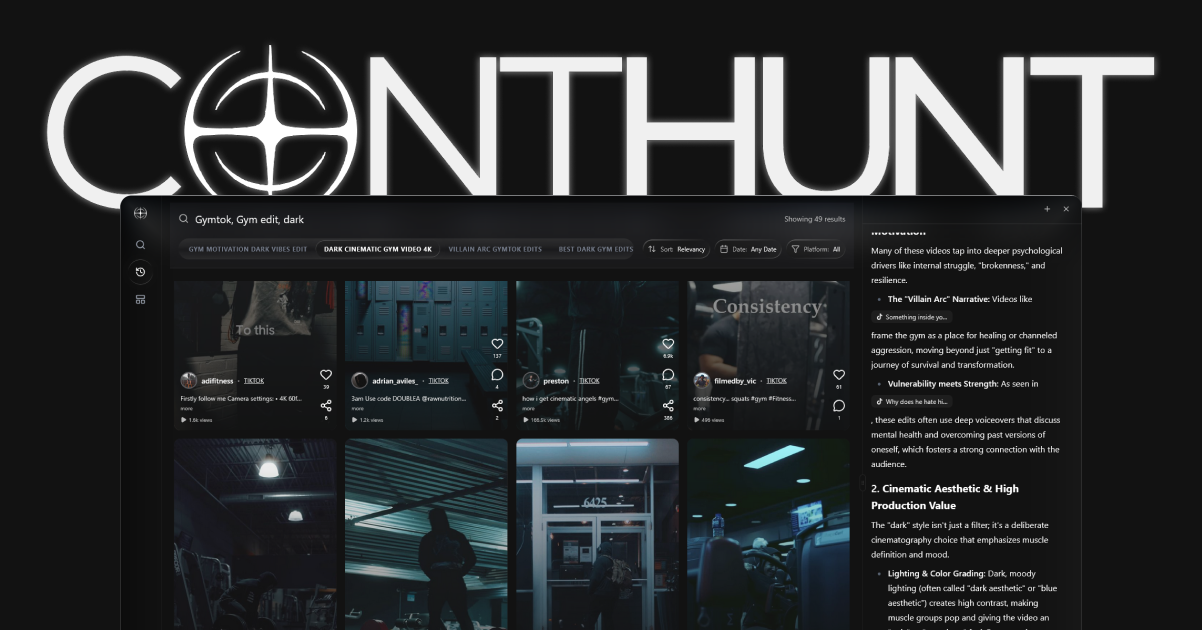
Compare against your own median, not against a celebrity account. ContHunt helps you inspect public Reels in the same niche so you can see how winners open. It does not expose Instagram’s ranker, and it is not a claim that ContHunt runs the Reels algorithm.
What to change next
| Symptom | Change first | Do not do first |
|---|---|---|
| Drop in second 1-2 | Hook and first overlay | Hashtag swap |
| Watch holds, no sends | Sharper payoff / ‘send this to X’ utility | New audio |
| Wrong audience comments | Topic words + hashtags | Posting time |
| Good on followers, dead in Explore | Stronger topic clarity in speech | Buying a sound |
Then film the next Reel. The algorithm learns from a sequence, not from one resurrection attempt on an old post.
For a list of formats that tend to hold attention, go back to Instagram Reels content ideas.
Key data
- Hook window
- 1s — The first frame has to make a promise before the swipe.
- Expansion signal
- Watch + send — Completion and shares beat empty likes when Instagram decides whether to widen the test.
Sources
- Instagram 2025 ranking update · Instagram