Instagram Reels hashtags are a classification layer, not a ranking switch. This page is only about tags on Reels. For ideas and packaging, use the hub: Instagram Reels content ideas. For distribution mechanics, use Instagram Reels algorithm.
What hashtags can and cannot do
Hashtags help Instagram and viewers group similar Reels. They cannot:
- Fix a weak first two seconds
- Override a caption that promises something the video does not deliver
- Force a Reel into a trend it does not belong to
Treat each tag as a label you would be willing to put on a folder. If the Reel would look out of place in that folder, drop the tag.
A practical Reels hashtag set
Build three layers, then stop.
- Format:
#reelsor#instagramreelsonly if it is true. - Topic: the actual subject (
#homecafe,#sqlforbeginners,#cutday). - Sub-niche or audience: who it is for (
#newrunners,#b2bmarketing).
Skip:
- 20 generic tags (
#love,#instagood,#viral) - Tags that describe a trend you did not use
- Competitor brand tags used as bait
A clean example for a 20-second pour-over tutorial:
#reels #pourovercoffee #homebarista
That is enough. If a fourth tag names a specific method (#v60), add it. If a fifth tag is a location only relevant to the story, add it. Do not keep going to 15.
Where to put Instagram Reels hashtags
Put the first line of the caption in plain language. Put hashtags after a line break at the end. Viewers read the first line; the algorithm can still see the tags.
Do not hide a wall of tags behind a row of periods. If you need that trick, you have too many tags.
On-screen text should repeat the topic words, not the hashtag symbols. Spoken audio should do the same. Instagram transcribes Reels; alignment between speech, overlay, and caption matters more than a tenth hashtag.
Research hashtags from public Reels
Static lists rot. The useful method:
- Collect 10 public Reels in the same niche that clearly outperform the creator’s median.
- Write down the first on-screen line, the first spoken line, and the hashtags.
- Keep tags that appear on more than one winner and describe your next video.
- Drop tags that only appeared on a celebrity account or a different language market.
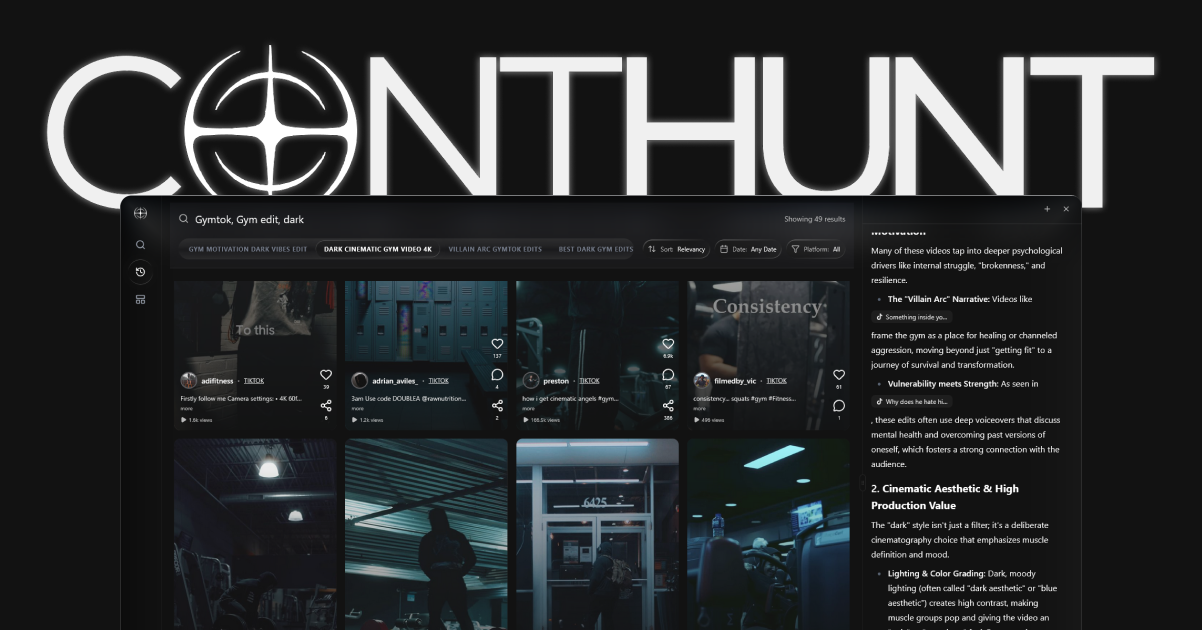
ContHunt is built for that public-example pass: find Reels that already work in a niche, then inspect packaging. It will not tell you a secret hashtag that guarantees reach.
If you also publish Shorts, do not paste Reels tags onto YouTube. Shorts hashtag rules are different; start from best hashtags for YouTube Shorts.
Hashtags vs keywords in the caption
A hashtag is a token. A keyword is the phrase a person would type or say. For Reels, both can exist in the same caption:
- First line:
How I grind for a V60 at home (no scale) - Tags:
#pourovercoffee #v60 #homebarista
The first line is the search-shaped sentence. The tags are the folder labels. Do not turn the first line into #How #I #grind.
Testing without fooling yourself
Change one thing at a time. If you rewrite the hook and the hashtags in the same upload, you will not know which move mattered.
A simple loop:
- Week 1: same hook family, two hashtag sets (specific vs mixed).
- Week 2: keep the better tag set, test a new hook.
- Record saves, shares, and 3-second holds, not just views.
If a tag set sends comments from the wrong audience (wrong country, wrong sport), kill it even if views went up.
Checklist
- 3 to 5 Instagram Reels hashtags that name the actual topic
- First caption line written in sentences, not tags
- Speech and overlay use the same topic words
- No copied 30-tag block from a 2021 thread
- Public examples reviewed before you publish, including via Instagram Reels content ideas
Hashtags are the last 10% of a Reel. Spend the other 90% on the opening, the payoff, and whether the video is even about the topic you tagged.
Key data
- Starter set
- 3-5 — Enough to name format, topic, and sub-niche without a spam block.
- Placement
- Caption — Put tags at the end of the caption after a clear first line.
Sources
- Hashtags on Instagram · Instagram Help